


Building Trades vs. HVAC-R: Which UA449 Apprenticeship Track Fits You Best?
If you have decided to skip the traditional four-year college route and avoid crushing student loan debt, you are already ahead of the curve. Stepping into a skilled trade is one of the smartest financial moves you can make right now—especially here in Western Pennsylvania.
Whether you are a recent high school graduate in Beaver County, a veteran transitioning out of the military near Erie, or a career changer in Pittsburgh looking for a fresh start, Steamfitters Local 449 offers a clear path to a six-figure career. With massive investments in regional infrastructure, hospital expansions, and the rapid boom of AI data centers across Western PA, the demand for skilled pipefitters and technicians has never been higher.
Once you decide to apply for a UA449 apprenticeship, however, you immediately face a major fork in the road. When you submit your application, you have to choose between two distinct career tracks: Building Trades or HVAC-R (Mechanical Equipment Service).
Both paths offer the exact same “earn while you learn” model, starting apprentices at roughly $33,000 a year and scaling past $104,000 upon graduation—plus comprehensive healthcare, a traditional pension, and a retirement annuity. Yet, the day-to-day reality of each job is completely different.
Before Spring 2027 applications open, let’s break down both tracks so you can figure out which one matches your personality, strengths, and career goals.
The Quick Comparison: Building Trades vs. HVAC-R
While both tracks train out of our world-class Harmony Technology Center in Harmony, PA, your daily routine on the job site will look very different depending on which path you pick.
Track 1: Building Trades (The Builders and Fabricators)
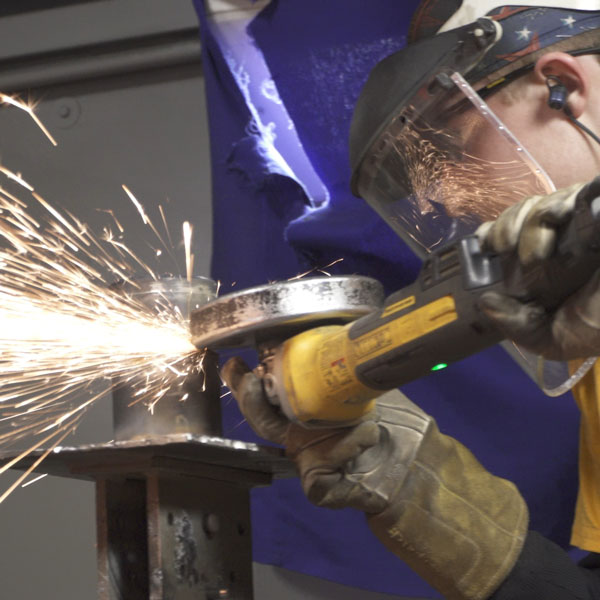
When most people picture a steamfitter, they are picturing a Building Trades journeyman. This is the heavy-duty construction side of the industry. Building Trades steamfitters install, fabricate, and weld the massive high-pressure piping systems that keep modern society running.
Think about the miles of stainless steel and carbon steel piping inside a major Pittsburgh hospital, a Beaver County manufacturing plant, or a newly constructed AI data center in Cranberry Township. Someone has to measure, cut, rig, and weld every single inch of that infrastructure to microscopic tolerances.
What Your Day Looks Like
- Working with Heavy Metal: You will master advanced welding techniques—including TIG, MIG, stick, and automated orbital welding—alongside precision pipe bending and threading.
- Reading Complex Blueprints: You aren’t just turning wrenches; you are interpreting isometric drawings and 3D CAD models to lay out intricate piping systems before a single weld is struck.
- Team-Driven Milestones: You will work alongside large crews of fellow UA449 members and other building tradespeople, watching massive structures rise from the ground up over months or years.
Who Thrives in Building Trades?
You will love Building Trades if you take pride in physical craftsmanship and want to point at a skyline or industrial facility and say, “I built that.” It is ideal for hands-on learners who enjoy working as part of a tight-knit crew, don’t mind working outdoors or in unfinished buildings during construction phases, and want to become elite, certified welders and fabricators.
The Pre-Apprenticeship Commitment
Because safety and precision welding are non-negotiable on major construction sites, accepted Building Trades applicants start with an 18-week unpaid daytime training program at the Harmony Technology Center. During this intensive bootcamp, you earn foundational welding certifications and OSHA safety credentials before ever stepping onto a job site as a paid first-year apprentice.
Track 2: HVAC-R Service (The High-Tech Diagnosticians)
If Building Trades members are the ones who build the systems from scratch, HVAC-R (Heating, Ventilation, Air Conditioning, and Refrigeration) technicians are the high-tech doctors who keep those systems alive, efficient, and running 24/7.
Modern commercial HVAC-R is a far cry from basic residential furnace repair. Today’s commercial buildings, surgical suites, pharmaceutical labs, and data center server rooms rely on massive chillers, boilers, complex refrigeration racks, and computerized building automation controls. If a cooling system goes down in a critical facility, an HVAC-R technician is the first call.
What Your Day Looks Like
- High-Tech Troubleshooting: You will spend your days using digital multimeters, refrigeration gauges, and laptops to diagnose electrical faults, airflow imbalances, and sensor failures.
- Smart Building Controls: A massive portion of modern HVAC-R work involves programming and calibrating Direct Digital Control (DDC) systems that manage energy efficiency across entire campuses.
- Variety and Autonomy: Instead of reporting to the same construction site every morning for six months, most seasoned HVAC-R technicians drive a company-issued service van, visiting different commercial clients across Butler, Washington, Allegheny, or Erie counties every single day.
Who Thrives in HVAC-R?
You will thrive in HVAC-R if you are a natural puzzle-solver who loves figuring out why something isn’t working. If you enjoy electronics, computers, physics, and working independently without someone looking over your shoulder, this track is built for you. It also appeals to people who enjoy interacting with facility managers and building engineers while working primarily in conditioned, indoor mechanical rooms.
The Pre-Apprenticeship Commitment
Accepted HVAC-R applicants begin their journey with a 10-week unpaid daytime training program at the Harmony Technology Center. You will master electrical schematics, refrigerant handling (EPA Section 608 certification), and core thermodynamics so you can hit the ground running with a signatory contractor right away.
How to Prepare Before Spring 2027 Applications Open
Applications for Steamfitters Local 449 run on an annual cycle, reopening in Spring 2027 (with formal application windows typically landing in June). Because spots in both tracks are competitive, the applicants who stand out during the written aptitude exam and panel interview are the ones who start preparing months in advance.
Here is how you can put yourself at the front of the line right now:
- Brush Up on Practical Math: You do not need calculus, but you must be rock-solid with fractions, decimals, ratios, basic geometry, and introductory algebra. Pipe offsets and electrical load calculations rely on these fundamentals every day.
- Plan Financially for the Pre-Apprenticeship: Knowing upfront that Building Trades requires 18 weeks of unpaid daytime schooling (and HVAC-R requires 10 weeks) allows you to save money or arrange a flexible evening job ahead of time. Once you finish that initial window, your paid five-year apprenticeship begins immediately.
- Check Your Basic Requirements: Make sure you have your high school diploma or GED ready, hold a valid driver’s license with reliable transportation to reach the Harmony Technology Center and regional job sites, and are prepared to pass a drug screening.
- Get Hands-On Experience Now: If you are still in high school, sign up for shop, welding, or electronics classes. If you are already out of school, consider working as a delivery driver for a supply house or taking an entry-level laborer role to prove your work ethic.
Ready to Build Your Future with UA449?

You do not have to choose between earning a great living today and building long-term security for your family. Whether you gravitate toward the sparks and steel of Building Trades or the high-tech diagnostics of HVAC-R Service, Steamfitters Local 449 gives you debt-free training, unmatched retirement benefits, and a brotherhood and sisterhood that spans over 112 years of Western Pennsylvania history.
Keep an eye on our Apprenticeship Information page for official Spring 2027 application announcements and start preparing today for a career that cannot be outsourced or automated.