

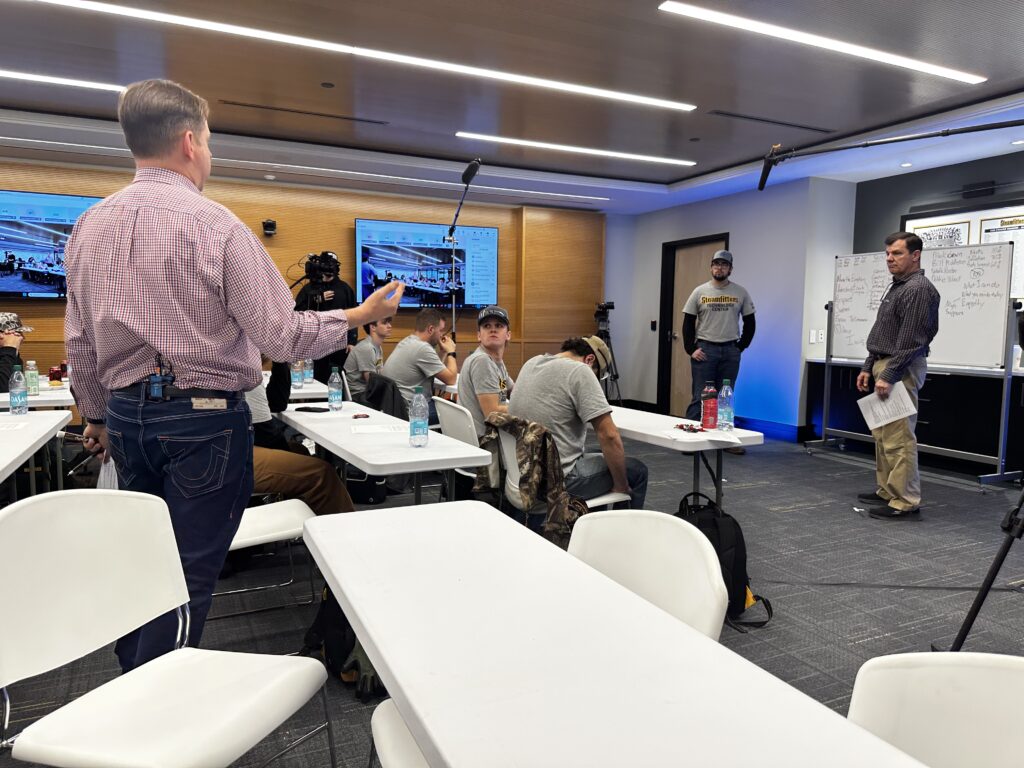
Before starting an apprenticeship, mechanical service apprentices at Local 449 Steamfitters complete **customer service training** through a 10-week Accelerated Service Training (AST) program. During this intensive 40-hour week, apprentices build communication, empathy, and customer relationship skills alongside technical training.
Customer Service Training Through Real-World Role Play
This training increases the value of Steamfitters coming out of the program. Apprentices become more well-rounded in the field because they will not only be able to provide expert technical service, but also customer service. These courses, while similar to the Dale Carnegie classes brought in last month, are a required portion of the apprentice curriculum at Local 449.
A unique aspect of this course at Local 449 is that students can actually put the skills they learn in the classroom to the test in role-playing scenarios with paid actors. Before this, throughout the week, students learn skills like effective communication in voice inflection and body language, empathy, and active listening.
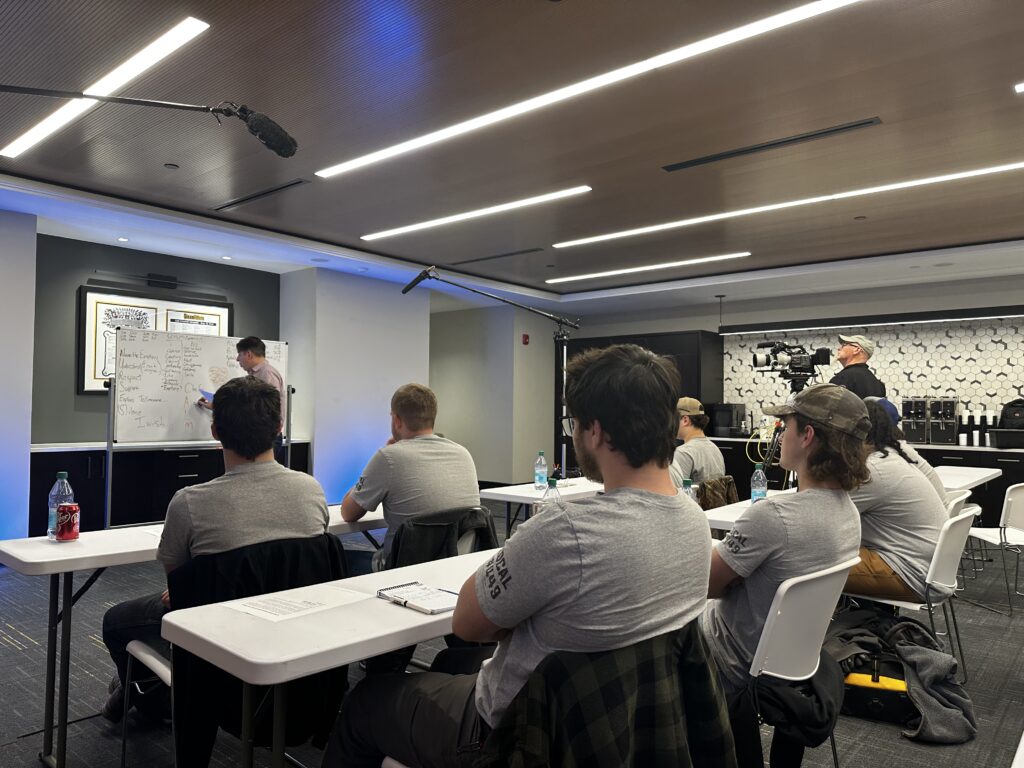
“We have to find out what language the customer can speak in relation to our trade,” said Butch Dee, who has been teaching the course since 2002. “From there, we are learning how to ask appropriate questions.”
How Apprentices Learn Conflict Resolution
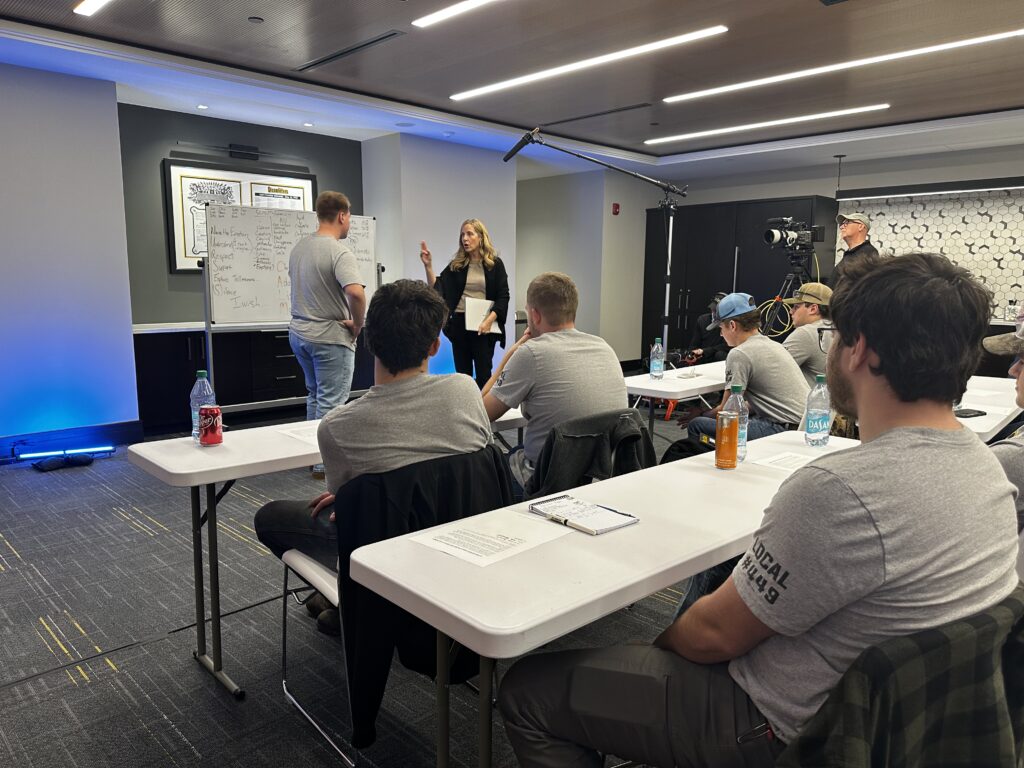
Dee also teaches a recovery method called STARS: show empathy, take responsibility, apologize, resolve the problem, and reach satisfaction. This approach teaches Steamfitters to properly communicate mistakes with customers while keeping the good rapport they should have already built.
Robert Sutkowski, from the Buncher Company, a property management company in Western Pennsylvania, comes in as a guest speaker to these customer service training courses to share his experiences from working in the industry for 35 years. Sutkowski aims to share both good and bad experiences with the students to prepare them for the various types of customers they will come across in the field.
“You can be the best person in the world at repairing something, but if you’re the worst person in the world to be around, you’re probably not going to be invited back,” Sutkowski said. “They’ll go with the second best who has a better personality and better customer service relations.”
Other topics covered include how to effectively say no to a customer and dealing with conflict, emotional or non-emotional.
Why Customer Relations Matter in the Field
“All of the pieces from this week [of the AST] fit into emotional intelligence,” Dee said. “I have to be self-aware, and I have to know how I’m feeling so I can self-manage myself.”
Then, on the last day of the course, the students take all these skills and spend 8 hours participating in customer service training role-play scenarios with actors who change their emotions to guide apprentices through real-world situations.
Two students of the course, Hunter Leslie and Nicholas Rolla, shared that this role-play aspect was their favorite part of the class because they enjoyed watching their classmates figure out how to handle the situations, but also helping each other along the way.
“The number one thing I’ve learned so far is just to keep your cool and remember your steps going through when you are talking to customers,” Rolla said.
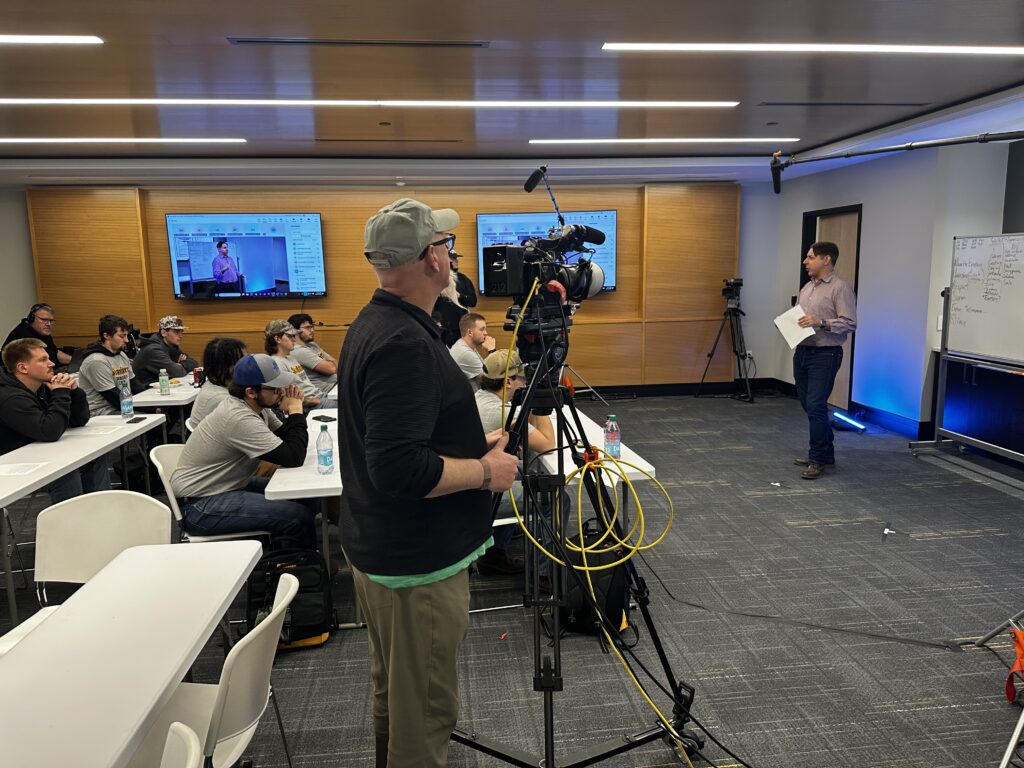
Trainees should come out of the week with a better understanding of how important customer relations are in the industry, and with practice applying these skills in real-world scenarios.
“We want to teach our apprentices the skills to handle our most valuable possession, our customers,” Dee said.